MATCHING
Thousands of shared points
Feature detectors pick out corners and blobs that are repeatable and distinct, so the same spot can be found again in the next photo.
See the numbers photospairup
HOW PANORAMA STITCHING WORKS
A wide panorama is usually several ordinary photos.
Check your shots
OVERLAP15 to 30 percent
Stitching software finds distinctive points that appear in two overlapping pictures, works out how one picture must bend to fit the other, then blends the seam. It only works well when the photos give it enough shared detail.
Updated
THE SHORT ANSWER
Stitching has three main parts:
registration, calibration and blending.
MATCHING
Feature detectors pick out corners and blobs that are repeatable and distinct, so the same spot can be found again in the next photo.
See the numbersCHECKING
A method called RANSAC repeatedly tries models on random sets of matched points and keeps the one that fits the most matches.
How to shootBLENDING
Light can differ between frames, and things move. Blending has to cope with parallax, lens distortion, scene motion and exposure differences.
What spoils itA QUICK SHOT CHECK
Pick a situation to see why it helps or hurts. The bar shows how much trouble it causes the software.
Based on encyclopedia articles on image stitching and AutoStitch, and the 2004 SIFT paper. General information.
TWO NUMBERS WORTH KNOWING
One figure on how many features a photo yields,
one on how false matches are weeded out.
≈ 2,000
Stable features in a typical 500 × 500 image
The paper that introduced SIFT features says a typical 500 by 500 pixel image gives about 2,000 stable features, depending on content and settings.
FEATURES · LOWE 2004
90%
False matches removed by a simple ratio test
Rejecting matches whose closest-to-second-closest distance ratio is above 0.8 removed 90% of false matches while discarding less than 5% of correct ones.
MATCHING · LOWE 2004
The SIFT features are invariant to image scale and rotation, which is why a zoomed or slightly turned photo can still be paired with its neighbour.
FOUR HABITS FOR A CLEAN STITCH
These follow from what stitching software needs, whatever app or camera mode you use.
Aim for at least 15 to 30% overlap so neighbouring shots share enough detail.
Consistent exposure between frames reduces the chance of visible seams.
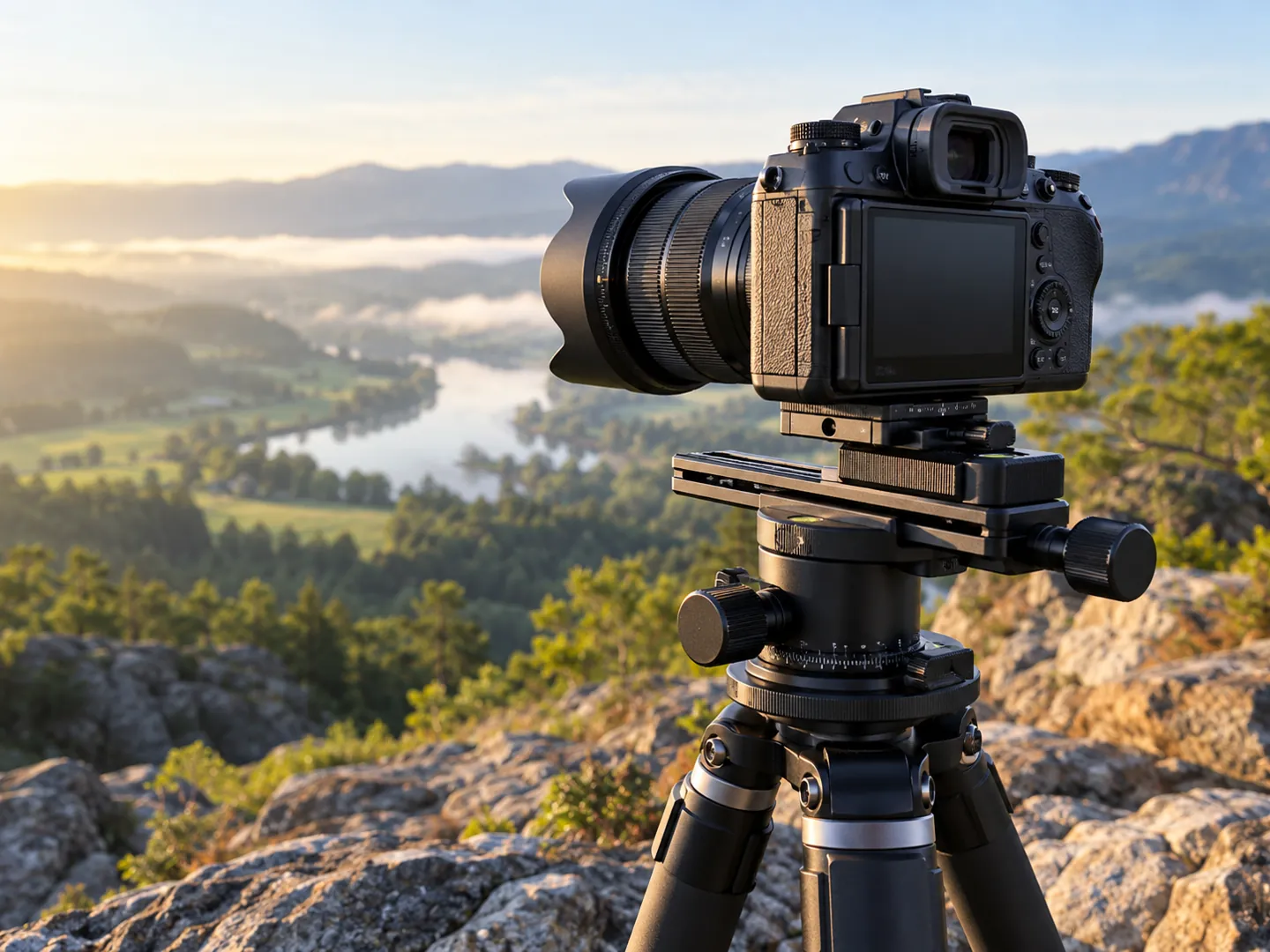
Take every photo from a single point, rotating the camera, to avoid parallax.
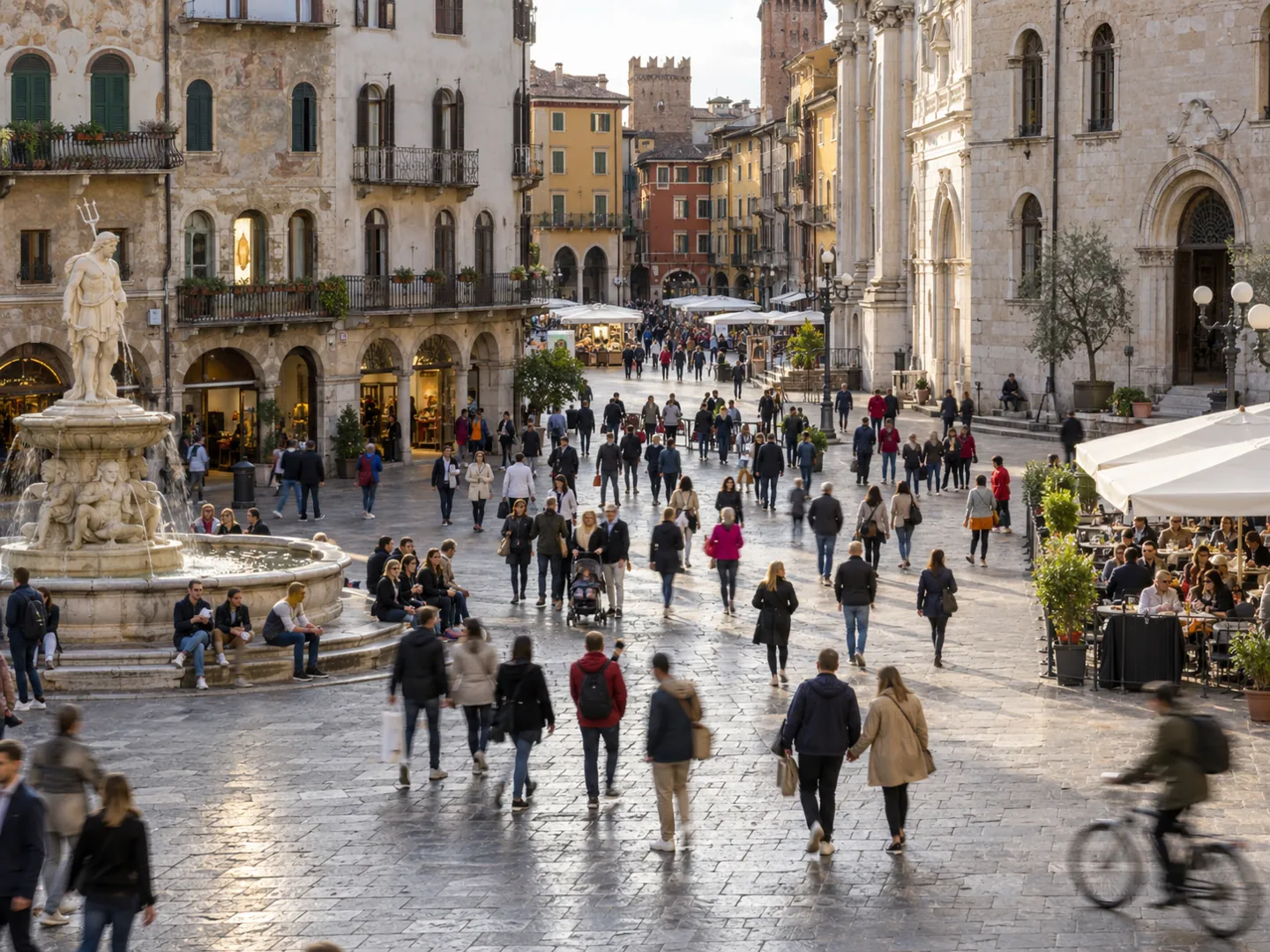
Moving people or vehicles in the overlap make frames disagree, so shoot when the scene is still.
HOW THE MATCH IS MADE
One of the first interest point detectors was developed in 1977 for research on guiding a robot through a cluttered environment. Later detectors improved on it, and the 2004 SIFT paper described features that stay the same when an image is scaled or rotated.
Once points are matched, the software estimates a projective transform for each image, a change of coordinates that keeps straight lines straight, and places every photo on one surface before blending the overlaps.
Questions
It finds distinctive points in overlapping photos, matches them between pairs of images, estimates how each image must be transformed to line up, and blends the overlaps into one picture.
The Wikipedia article on image stitching says the ideal set has a reasonable overlap of at least 15 to 30%, with consistent exposure between frames.
Light can differ between the two views, or the background can change. Parallax, lens distortion, scene motion and exposure differences all make seams more likely.
RANdom SAmple Consensus, an iterative method that fits models to random samples of matched points and keeps the one that agrees with the most matches, ignoring outliers.
Automatic stitching tools such as AutoStitch require all photos to be taken from a single point. Moving the camera sideways adds parallax, which blending struggles to hide.
ABOUT THIS NAME
photospairup.com is part of the DoodleSale portfolio. It isn't in an auction right now, but you can ask about leasing it.